
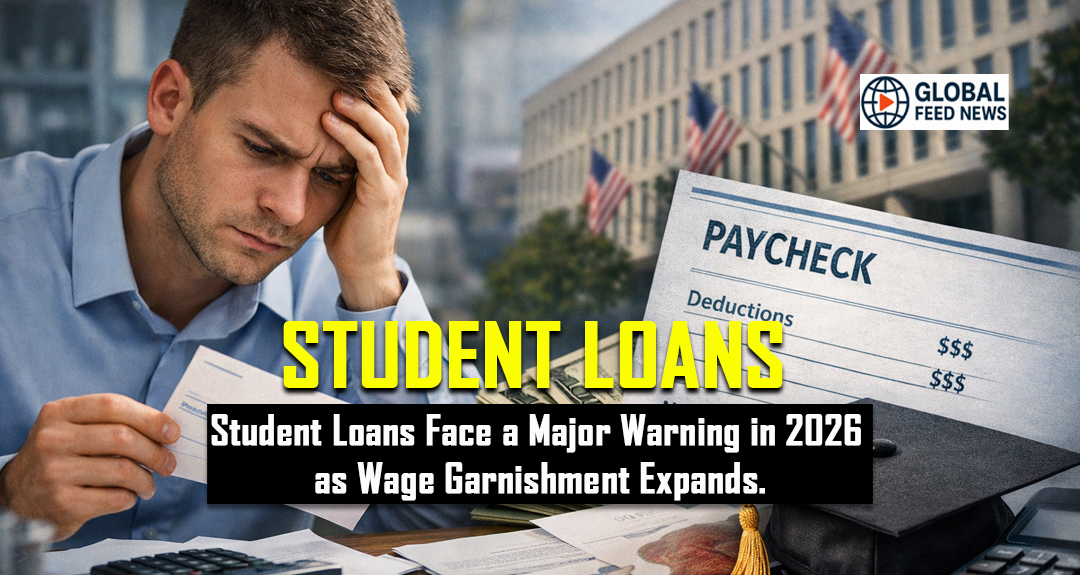
The landscape of student loans in the United States is entering a new and tense phase in 2026. After years of payment pauses, shifting policies, and political debate, federal authorities have resumed aggressive collection efforts against borrowers who have fallen into default.
At the center of this development is wage garnishment — a legal process that allows the federal government to deduct money directly from a borrower’s paycheck. For millions of Americans still struggling with education debt, this marks a serious financial turning point.
Recent federal notices sent to borrowers signal that up to 15% of disposable income may be withheld in some cases. For households already stretched by inflation, rent increases, and higher living costs, the consequences could be immediate and painful.
This article explains why this is happening now, who is most affected, and what it means for the future of education debt in America.
Table of Contents
1. What Is Happening With Federal Loan Collections in 2026
Federal agencies have restarted formal collection actions against borrowers who defaulted on education-related debt during or before the pandemic-era relief programs.
Notices are being sent warning that paychecks may soon be garnished, tax refunds offset, or federal benefits reduced if borrowers do not respond. This is not a theoretical threat — it is a legally authorized process already underway in multiple states.
The government argues that repayment enforcement is necessary to maintain the integrity of the lending system and protect taxpayers who back federal loan programs.
2. Why Wage Garnishment Is Returning Now
For nearly three years, emergency measures shielded borrowers from harsh collection tools. Those protections ended as repayment programs resumed.
Key reasons behind the renewed enforcement include:
- Expiration of pandemic relief policies
- Rising federal deficit concerns
- Pressure to stabilize loan repayment programs
- Political messaging around fiscal responsibility
Officials say borrowers were given ample warning and multiple opportunities to re-enter repayment plans before enforcement resumed.
3. Who Is Most at Risk
While not all borrowers face immediate action, certain groups are more vulnerable:
- Individuals already in default
- Borrowers who ignored recent federal notices
- Workers with steady payroll income
- Low- to middle-income households
Those with private loans are governed by different rules, but federal loan holders face broader government authority.

4. How Wage Garnishment Works
Wage garnishment allows the federal government to legally instruct employers to withhold part of an employee’s earnings.
Key details include:
- Up to 15% of disposable income may be taken
- No court judgment is required for federal debt
- Employers must comply once notified
- Garnishment continues until debt is resolved
This process often catches borrowers off guard, especially those who believed relief programs were still in effect.
5. Economic Pressure on Borrowers
The timing could not be worse for many Americans.
Inflation remains stubborn, housing costs are elevated, and healthcare expenses continue to rise. Losing even a small portion of take-home pay can disrupt:
- Rent or mortgage payments
- Childcare budgets
- Medical expenses
- Credit scores and loan access
For many, this enforcement feels less like accountability and more like punishment during financial recovery.

6. Historical Background of Education Debt Collection
Education debt collection has long been among the strictest in the U.S. financial system.
Unlike credit card debt:
- It is rarely dischargeable in bankruptcy
- Collection powers are stronger
- Interest continues to accrue
- Government agencies have extended authority
Past administrations have used wage garnishment as a routine enforcement tool, especially after economic recoveries.
7. Expert Insights on the Policy Shift
Financial policy experts warn that aggressive collection may backfire.
Some economists argue:
- Garnishment reduces consumer spending
- It increases reliance on credit
- It may push borrowers into informal work
- Long-term repayment success may decline
Others believe enforcement restores fairness to taxpayers and encourages participation in income-based repayment plans.
8. State-Level Impact and Regional Differences
While federal rules apply nationwide, impacts vary by region.
States with higher concentrations of service workers and public-sector employees may see stronger effects. Regions with lower median wages could experience disproportionate hardship.
Some states are also exploring additional borrower assistance programs to offset the pressure.
9. Market and Economic Reactions
From an economic perspective, renewed collections have mixed effects.
Positive signals include:
- Improved federal balance sheets
- Reduced long-term loan delinquency rates
- Greater predictability for lending programs
However, consumer markets may feel a slowdown as disposable income shrinks for affected households.
Retail, housing, and credit markets are watching closely.
10. What Borrowers Can Do Right Now
Borrowers still have options.
Experts recommend:
- Responding immediately to federal notices
- Applying for income-driven repayment plans
- Requesting loan rehabilitation
- Consulting nonprofit financial counselors
Ignoring notices almost guarantees wage garnishment.

11. Long-Term Implications for the Education System
This enforcement wave could reshape higher education financing.
Possible outcomes include:
- Increased skepticism toward borrowing
- Growth of alternative education models
- Political pressure for reform
- Renewed debate over forgiveness programs
Future students may think twice before taking on large education-related debt.
12. What Happens Next
Federal agencies are expected to continue enforcement throughout 2026 unless new legislation intervenes.
Policy discussions remain active, but borrowers should not assume relief is coming soon.
Preparation, communication, and proactive action are critical.
Conclusion
The renewed push to collect on student loans marks a defining financial moment for millions of Americans in 2026.
Wage garnishment is no longer a distant possibility — it is a present reality. While the government seeks accountability, borrowers face real-world consequences that ripple through households and the broader economy.
Understanding the rules, knowing your options, and acting early can make the difference between stability and serious financial strain.
FAQs
Can the government garnish wages without a court order?
Yes, federal loan collection does not require a court judgment.
How much of my paycheck can be taken?
Up to 15% of disposable income in most cases.
Can garnishment be stopped once it starts?
Yes, through repayment plans, rehabilitation, or settlement in some situations.
Does this affect private education loans?
No, private lenders follow different legal processes.
Will this policy change soon?
There is no confirmed timeline for policy reversal.