
Mutual funds are one of those financial terms you hear everywhere – in the news, in bank advertisements, from colleagues, or during general money conversations. Yet many people shake their heads without fully understanding what a mutual fund really is or how it works.
If you’ve ever felt confused or hesitant about mutual funds, you’re not alone. This guide explains mutual funds in simple language, without technical jargon or sales talk. The goal is understanding, not persuasion.
Table of Contents
What is Mutual Fund?
Simply put, mutual funds are a way for many people to invest together.
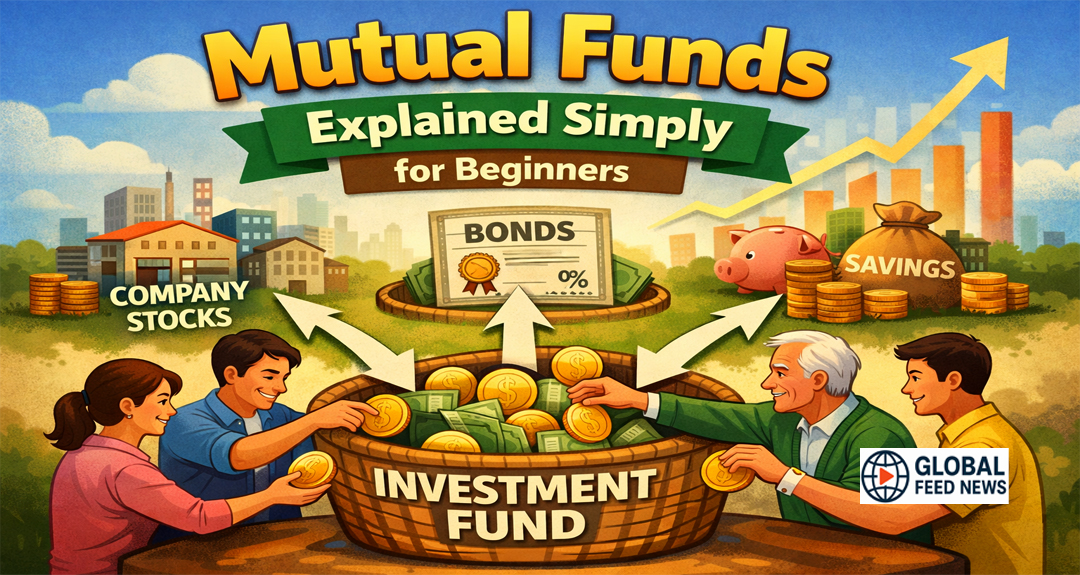
Instead of one person investing money in different companies or assets, mutual funds pool money from many investors and invest it as a group. This pooled money is managed by professionals who decide where to invest it.
Think of it like a shared basket. Everyone puts some money into it, and the basket contains not just one, but different investments.

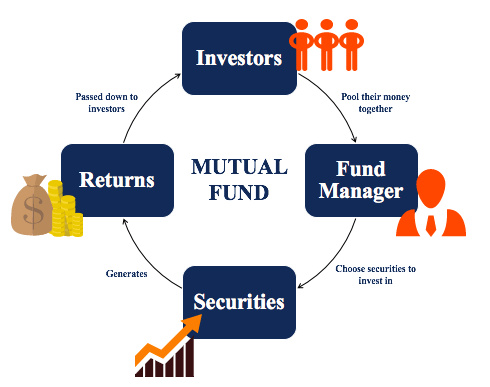
How Mutual Funds Work (Step by Step).
It’s easier to understand how mutual funds work when you break it down:
- Many people invest small or large amounts.
Salaried employees, business owners, and retirees all invest based on their comfort level. - Money accumulates.
All the accumulated money forms a large investment pool. - This fund invests in multiple assets.
This may include shares of companies, bonds, or other financial instruments. - Professional Management.
Trained fund managers make decisions such as buying or selling investments. - Returns are shared.
Any profits or losses are shared between investors based on how much they have invested.
This framework helps people participate in the markets without having to manage everything themselves.
Types of Mutual Funds (Basic Overview).
There are many types of mutual funds, but beginners only need to understand the broad categories:
Equity Mutual Funds.
These invest primarily in company shares. Their value changes with market movements.
Debt Mutual Funds.
These funds focus on fixed-income instruments such as bonds and government securities.
Hybrid Mutual Funds.
These funds combine equity and debt investments to balance different types of investments.
Index Mutual Funds.
These track a specific market index and aim to mirror its performance.
You don’t need to master every type immediately. Knowing the categories is enough to start learning.
Benefits of Mutual Funds.
Mutual funds are popular because they offer many practical benefits:
Diversification.
Instead of relying on one company or asset, your money is spread across many investments.
Professional Management.
You don’t need to track the markets every day or analyze companies yourself.
Accessibility.
Many mutual funds allow small, regular investments, making them accessible to beginners.
Transparency.
Investors can see where their money is invested through regular disclosures.
These advantages make mutual funds easier to understand than many other investment options.

Risks involved in mutual funds.
Mutual funds offer benefits, but they also carry risks. Understanding this helps set realistic expectations.
Market Risk.
The value of an investment may go up or down depending on market conditions.
No guaranteed returns.
Mutual funds do not promise fixed or guaranteed returns.
Time Sensitivity.
Short-term fluctuations are common, especially in market-linked funds.
Being aware of these risks helps avoid emotional decisions and later confusion.
Mutual Funds vs Fixed Deposits.
People often compare mutual funds with fixed deposits as both are widely known.
Fixed Deposits
- Provide expected returns
- Low risk
- Limited growth potential
Mutual Funds
- Returns depend on market performance
- Carry high uncertainty
- High long-term growth potential
This comparison is about understanding the differences, not about choosing sides.
Who should consider mutual funds?
Mutual funds may be suitable for people who:
- Want to understand how the market works
- Prefer professional management over self-management
- Are comfortable with price fluctuations
- Focus on long-term financial awareness
It’s not just for experts – many beginners start with mutual funds, learning slowly.
Common Myths About Mutual Funds.
“Mutual Funds Are Only for the Rich”
In reality, people invest in small and regular amounts.
“They’re too complicated”
At their core, mutual funds are simple pooling systems.
“You need market skills”
Professional managers handle investment decisions.
Dispelling these misconceptions helps reduce unnecessary fears about mutual funds.
Why understanding mutual funds is important today.
Money habits are changing. People are looking for options beyond traditional savings methods. Understanding the basics of mutual funds for beginners helps you make informed financial conversations, decisions, and plans.
Even if you never invest, knowing what mutual funds are improves your financial awareness in a rapidly changing world.
Frequently Asked Questions (FAQs).
Are mutual funds safe for beginners?
Mutual funds involve risk, but understanding them properly reduces confusion and unrealistic expectations.
Can I lose money in mutual funds?
Yes, values can fluctuate. Mutual funds do not offer guaranteed returns.
Do mutual funds require daily monitoring?
No. Most investors review their investments periodically, not daily.
Are mutual funds the same as stock trading?
No. Mutual funds invest across multiple assets and are professionally managed.