
China’s Newly Built Hongqi Bridge Collapses After Massive Landslide
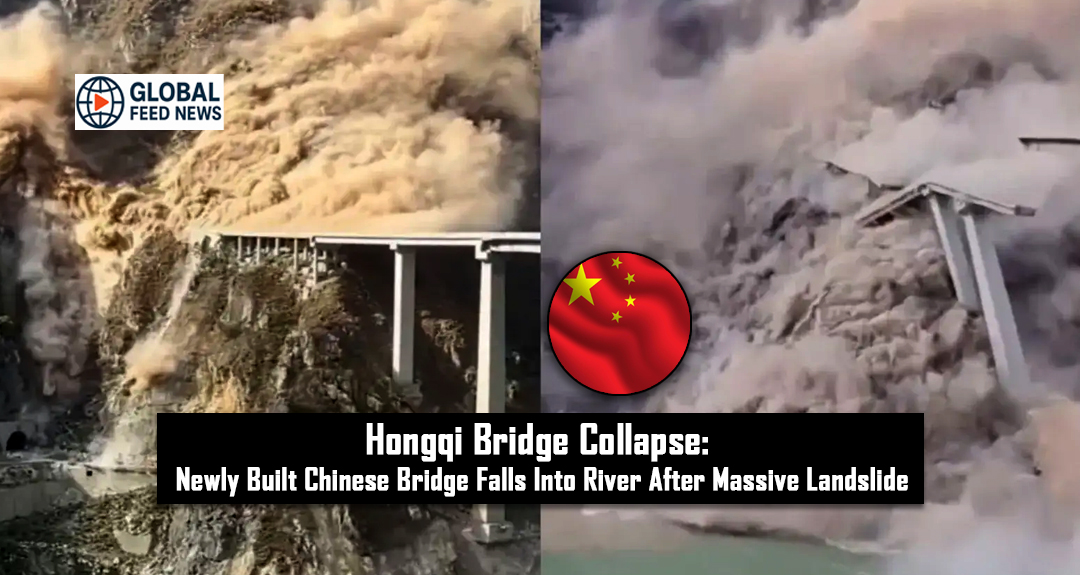
Sichuan, China — November 2025: A shocking infrastructure failure has rocked China’s Sichuan province as the Hongqi Bridge, a newly built 758-meter-long bridge, collapsed into a river following a massive landslide — just months after opening.
The Hongqi Bridge was hailed as a symbol of modern Chinese engineering, but its sudden failure has now become a major embarrassment and a public safety concern for the nation’s infrastructure development strategy.
What Happened?
According to reports from Fox News and India TV News, the Hongqi Bridge — part of the vital National Highway G317 connecting central China to Tibet — collapsed on November 11, 2025, after a large-scale landslide hit the mountain slope anchoring its support pillars.
Authorities confirmed that no vehicles were on the bridge at the time, as engineers had earlier detected cracks and ground movement, prompting officials to close the route just hours before the disaster.
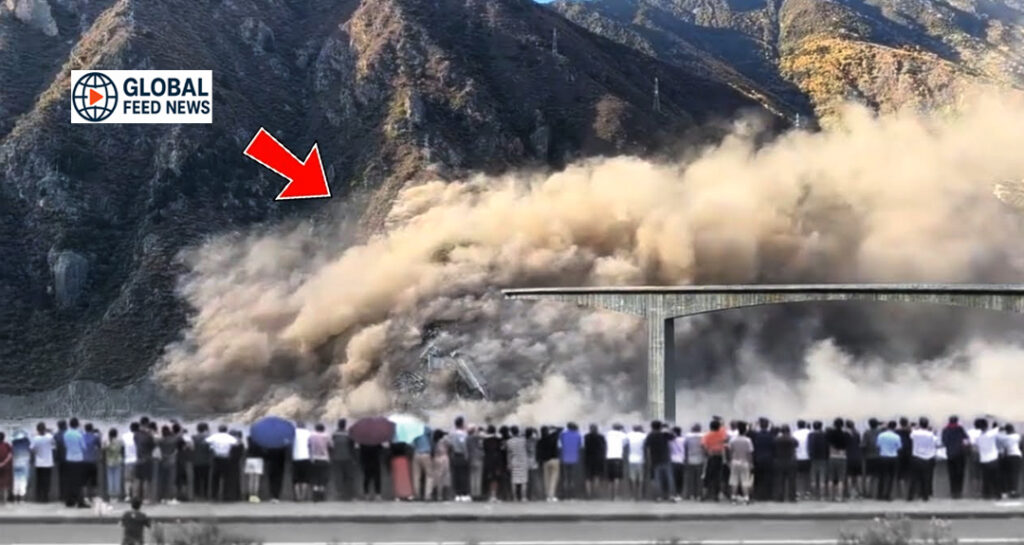
Eyewitness footage captured the moment of collapse, showing the entire span of the bridge plunging into the Dadu River below amid a huge cloud of dust and debris.
Key Facts About the Hongqi Bridge
- Location: Garzê Tibetan Autonomous Prefecture, Sichuan Province, China
- Length: 758 meters (2,500 feet)
- Height: Approximately 625 meters above the river valley
- Opened: Mid-2025
- Collapsed: November 11, 2025
- Primary Cause: Landslide and structural instability
- Casualties: None reported
The Moment of Collapse
Videos shared widely on Chinese social media platforms such as Weibo and Douyin show the bridge collapsing in seconds as the ground beneath it gives way.
In one clip, a roaring sound can be heard moments before the bridge deck snaps and drops, followed by a billowing dust cloud that covers the entire valley.
Experts suggest the collapse occurred when the landslide’s force destabilized the bridge’s foundation, causing multiple support columns to fail simultaneously.
Early Warning Signs Were There
Reports indicate that local engineers had noticed minor cracks and land deformation in the days before the collapse. Officials temporarily halted traffic — a decision that likely saved many lives.
However, critics argue that such cracks were early warnings of deeper structural and geological issues that should have prompted a full-scale evacuation and stabilization effort.
Geologists say Sichuan’s mountainous terrain, combined with intense rainfall and loose soil composition, makes it one of the most landslide-prone regions in China. The Hongqi Bridge’s location may have been especially vulnerable.
Government and Expert Reactions
China’s Ministry of Transport and local provincial authorities have launched an investigation to determine the exact cause of the collapse.
A team of structural engineers, geologists, and safety inspectors is now assessing the extent of damage and whether construction flaws, poor-quality materials, or insufficient soil analysis played a role.
A government spokesperson confirmed that:
“All necessary rescue and safety measures were taken. Fortunately, no casualties occurred, and we are conducting a full investigation to identify accountability.”
Meanwhile, experts worldwide are questioning whether China’s rapid infrastructure expansion is compromising long-term safety and environmental resilience.
Public Reaction: Anger and Disbelief
On Chinese social media, outrage and disbelief poured in within hours.
Many users questioned how a brand-new bridge — reportedly built at a cost of millions — could fail so quickly.
One popular comment on Weibo read:
“Another bridge collapses within months. Are we building for progress or publicity?”
This sentiment echoes previous controversies where rapid construction deadlines and political pressure allegedly led to compromised building standards.
Why the Hongqi Bridge Collapse Matters
The Hongqi Bridge disaster is more than a local tragedy — it’s a symbolic warning for China’s infrastructure boom. The incident raises fundamental concerns about:
- Engineering Oversight: Are safety checks being conducted rigorously before public openings?
- Geological Risk: Is sufficient study being done in high-risk mountain zones?
- Quality Assurance: Are contractors and government agencies prioritizing speed over safety?
China has built thousands of new bridges, tunnels, and expressways in recent years, often under intense political and economic pressure to demonstrate development progress. This collapse may force a nationwide review of similar projects.
Lessons Learned
The Hongqi Bridge collapse underscores the need for:
- Comprehensive geological assessments before major construction projects.
- Independent safety audits by third-party experts.
- Ongoing maintenance and monitoring, even after completion.
- Transparent public reporting on infrastructure integrity.
Experts emphasize that infrastructure safety depends not just on strong engineering but on long-term vigilance and accountability at every stage — from design to operation.
A Global Wake-Up Call
The incident also resonates internationally, especially among countries collaborating with China under the Belt and Road Initiative (BRI).
Analysts warn that similar construction practices in regions with unstable geology could lead to comparable tragedies unless strict quality controls are enforced globally.
For developing nations partnering with Chinese contractors, the Hongqi Bridge collapse serves as a critical case study in balancing speed, cost, and safety.
Conclusion: Speed Must Never Replace Safety
The collapse of the Hongqi Bridge is a stark reminder that even the most modern engineering achievements are vulnerable when natural forces and human oversight collide.
As China investigates and reassesses its approach, this disaster should encourage a nationwide commitment to safer, sustainable infrastructure.
Progress should never come at the cost of safety — and the fall of the Hongqi Bridge is proof that the lessons of engineering must always begin with stability beneath ambition.