
If you have just started a blog or website and want to make money from it, people usually hear about Google AdSense first. It’s beginner-friendly, widely trusted, and you don’t have to sell anything.
This guide explains how Google AdSense works in simple language, step by step. If you’re new to AdSense or have just gotten approved, this article will help you understand what’s really going on behind the scenes and what to expect in the early days.
Table of Contents
What Is Google AdSense and Why Beginners Use It.
Google AdSense is an advertising program that allows website owners to earn money by showing ads on their pages.
Advertisers pay Google to display their ads. Google shares a portion of that money with you when visitors view or click on those ads.
New people choose AdSense because:
- It’s free to join
- Ads are created automatically
- No direct advertiser deals required
- Payments are reliable and transparent
For new websites, it’s one of the easiest ways to start monetizing traffic.
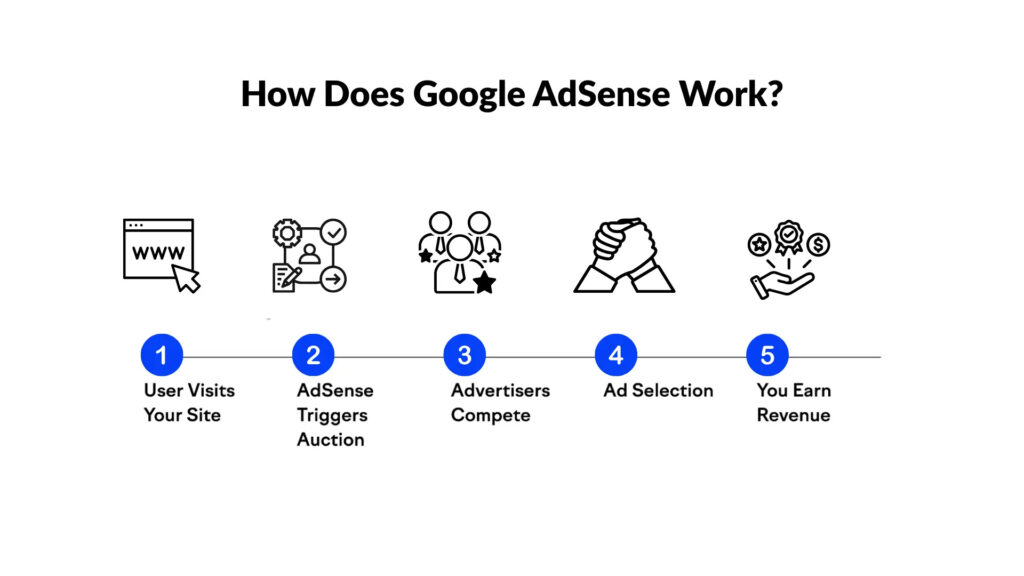
How Google AdSense Works (Step by Step).
Understanding the basic flow makes AdSense much less confusing.
Step 1: You Create Content
You publish blog posts, articles, or pages on your website.
Step 2: Visitors Come to Your Site
Traffic can come from Google search, social media, or direct visits.
Step 3: AdSense Scans Your Page
When a page loads, AdSense looks at:
- Your content topic
- Visitor location
- Browsing behavior (interest-based, if allowed)
Step 4: Ads Are Displayed
Relevant ads are shown automatically in available ad spaces.
Step 5: You Earn Money
You earn when:
- Someone clicks an ad (CPC)
- An ad is shown 1,000 times (CPM)
Everything happens in real time, without manual work.
How Ads Are Selected and Shown on Websites.
The ads are not random.
AdSense uses an automated auction system where advertisers bid to show ads to specific users. Usually the highest quality and highest paying ads win.
Ad selection depends on:
- Your page content
- Keywords and context
- Visitor’s country
- Device (mobile or desktop)
This is why the same page can show different ads to different users.
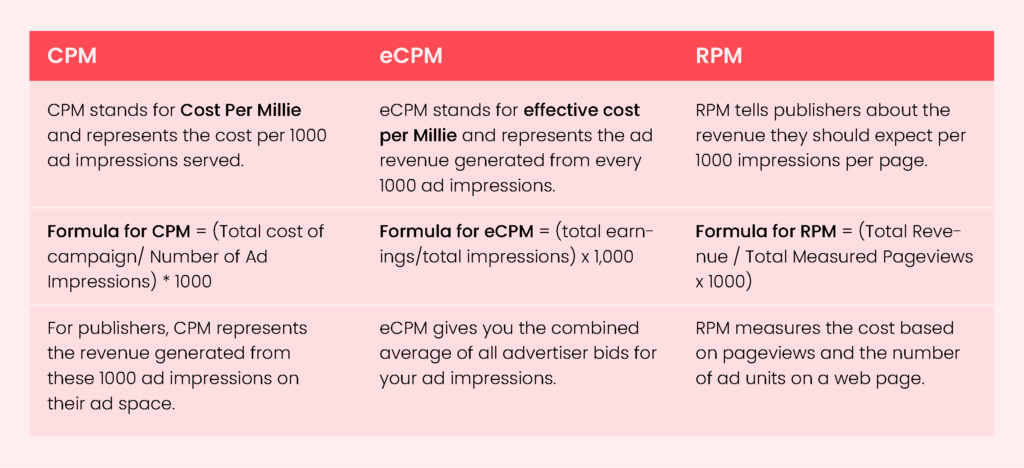
CPC, CPM, and RPM Explained Simply.
These terms confuse most beginners, so let’s break them down.
CPC (Cost Per Click)
You earn money when someone clicks an ad.
Example:
If CPC is $0.20, you earn $0.20 per valid click.
CPM (Cost Per 1,000 Impressions)
You earn money for every 1,000 ad views, even without clicks.
Example:
A $2 CPM means $2 for 1,000 ad impressions.
RPM (Revenue Per 1,000 Pageviews)
RPM shows how much you earn per 1,000 pageviews overall.
Formula:
Earnings ÷ Pageviews × 1,000
RPM helps you understand your site’s performance more clearly than CPC alone.
Why New Websites Usually Earn Low CPM at the Beginning.
Low earnings at the beginning are completely normal.
New websites often have:
- Low traffic volume
- Limited user data
- Low advertiser competition
Advertisers typically pay more for:
- Established websites
- High-quality traffic
- Buyer-focused audience
As your site grows and gains trust, CPM and RPM often improve naturally.
Factors That Affect Google AdSense Earnings
AdSense income varies widely. These factors matter the most.
1. Traffic Quality
Visitors from search engines usually perform better than random traffic.
2. Visitor Country
Traffic from countries like the US, UK, Canada, and Australia generally earns more than many other regions.
3. Content Type
Topics like:
- Finance
- Technology
- Education
- Business
often attract higher-paying ads.
4. User Experience
Fast loading pages and clean design increase ad visibility and engagement.
Common Mistakes Beginners Make With AdSense.
Many beginners lose potential income or risk account problems by making avoidable mistakes.
Common problems include:
- Clicking on your own ads
- Placing too many ads on the same page
- Using misleading ad placements
- Buying low-quality traffic
- Ignoring content quality
AdSense rewards trust and consistency, not shortcuts.
Best practices for safely increasing AdSense revenue.
Focus on long-term growth rather than making quick money.
Create helpful content.
Write content that actually helps readers solve problems.
Improve traffic, not the number of ads.
Higher quality visitors usually earn more than adding additional ads.
Use responsive ad units.
Ads that align across mobile and desktop perform better.
Be patient.
AdSense income grows slowly but steadily with time and effort.
Follow the policies carefully.
Always follow the AdSense guidelines to keep your account safe.
Frequently Asked Questions (FAQ).
Is Google AdSense good for beginners?
Yes. It is one of the easiest monetization methods for new websites with basic traffic.
How long does it take to earn with AdSense?
You can earn from day one after approval, but meaningful income usually takes time and consistent traffic growth.
Can I use AdSense on a small blog?
Yes. Even small blogs can use AdSense, though earnings may be low initially.
Why do my AdSense earnings change daily?
Earnings depend on traffic, advertiser demand, user location, and ad performance, which vary every day.
Is AdSense income guaranteed?
No. Earnings depend on traffic quality, content type, and user behavior.
Final Thoughts.
Google Adsense is not a shortcut to instant income. It’s a stable, beginner-friendly system that rewards quality content, patience, and trust.
If you focus on helping users first and developing your website properly, AdSense can become a reliable long-term revenue stream as your site matures.
1 thought on “How Google AdSense Works: Complete Beginner’s Guide for New Websites (2026).”