
US Government Shutdown: What It Means, Why It Happens & Its Global Impact
🏛️ What Is a Government Shutdown?
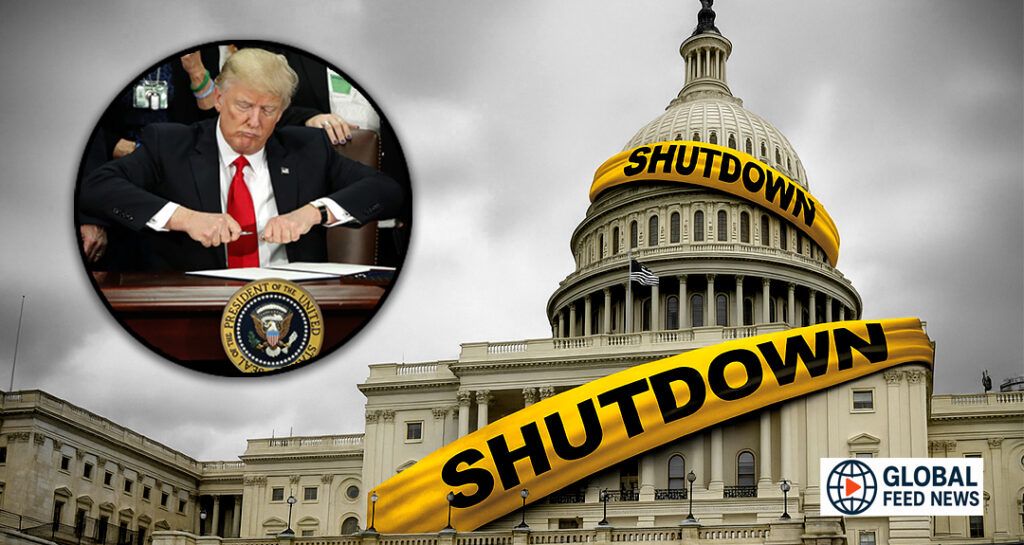
A US Government Shutdown occurs when the federal government temporarily suspends its operations due to a lack of approved funding from Congress.
Each year, Congress must pass spending bills to fund government agencies. When lawmakers fail to agree on these bills before the deadline, many departments run out of money and are forced to close or reduce services — resulting in a US Government Shutdown.
💰 Why Does a US Government Shutdown Happen?
The main reason for a shutdown is political disagreement.
In the United States, two major political parties — the Democrats and Republicans — often clash over spending priorities, taxation, or policy issues such as immigration or healthcare.
When neither side compromises, Congress fails to approve the federal budget, causing a halt in funding. Without this funding, government departments cannot pay employees or continue normal operations.
🧾 What Happens During a Shutdown?
When a shutdown begins, federal agencies are divided into two categories:
- Essential Services (remain open)
- Non-Essential Services (temporarily closed)
Essential Services include:
- Military and defense operations
- Law enforcement and security
- Air traffic control
- Emergency medical services
Non-Essential Services include:
- National parks and museums
- Passport and visa services
- Many federal offices and administrative departments
Thousands of federal employees are placed on furlough — meaning they are temporarily laid off without pay until the shutdown ends.
📅 Major US Government Shutdowns in History
The United States has experienced multiple shutdowns throughout its history.
Some of the most notable ones include:
| Year | Duration | Main Reason |
|---|---|---|
| 1995–96 | 21 days | Budget dispute under President Bill Clinton |
| 2013 | 16 days | Obamacare (Affordable Care Act) funding dispute |
| 2018–19 | 35 days | Border Wall funding dispute under Donald Trump |
The 2018–2019 shutdown was the longest in US history, lasting 35 days and costing billions in lost productivity.
🌍 How a Shutdown Affects the World
🇺🇸 Inside the US
- Hundreds of thousands of government workers go unpaid.
- Federal services like visa processing and national park operations stop.
- GDP growth slows down due to reduced consumer spending and delayed contracts.
🌏 Global Impact
The US economy is deeply tied to global markets.
When political instability rises in Washington, it affects global stock markets, the US dollar, and even gold prices.
Investors often seek safer assets like gold or cryptocurrency during prolonged shutdowns, which can cause volatility across world economies.
⚖️ Political Perspective
Political analysts describe a US Government Shutdown as a high-stakes negotiation tactic.
It’s used by political parties to exert pressure on the opposition or highlight specific issues.
However, for ordinary citizens, it brings economic hardship and uncertainty — proving that political deadlocks have real human costs.
🔍 The Current Situation (As of 2025)
As of late 2025, the US Congress is again facing intense budget debates.
The main disagreements revolve around defense spending, social welfare programs, and debt ceiling limits.
If both parties fail to reach a deal before the fiscal deadline, another partial shutdown could occur — potentially affecting millions of Americans and global investor sentiment.
📊 Economic Impact
According to the Congressional Budget Office (CBO), every 10 days of government shutdown costs the US economy around $1.2 billion in lost output.
A prolonged shutdown can:
- Delay government contracts and loans
- Disrupt federal research programs
- Lower business confidence and stock prices
Economists warn that repeated shutdowns weaken the government’s credibility and increase market volatility worldwide.
💬 Impact on Citizens
- Federal Employees: Go without pay during furloughs.
- Business Owners: Lose revenue due to halted contracts.
- Students: Delay in processing financial aid or loans.
- Tourists: Face closures of national parks and monuments.
Ultimately, it is the everyday American who bears the heaviest burden.
🧠 What We Can Learn from Shutdowns
Government shutdowns highlight how political polarization can paralyze a nation’s functioning.
They serve as a reminder that cooperation and compromise are essential in democratic systems.
Without dialogue and accountability, even the strongest economies can face instability and loss of trust.
🔚 Conclusion
The US Government Shutdown is not just a domestic political issue — it is a global economic event that influences markets, currencies, and investor confidence around the world.
To prevent such crises, the US must focus on responsible governance, timely policymaking, and bipartisan cooperation.
Only then can stability and trust be restored in both the American and global economies.
4 thoughts on “US Government Shutdown Explained: Causes, Effects & Global Impact (2025)”